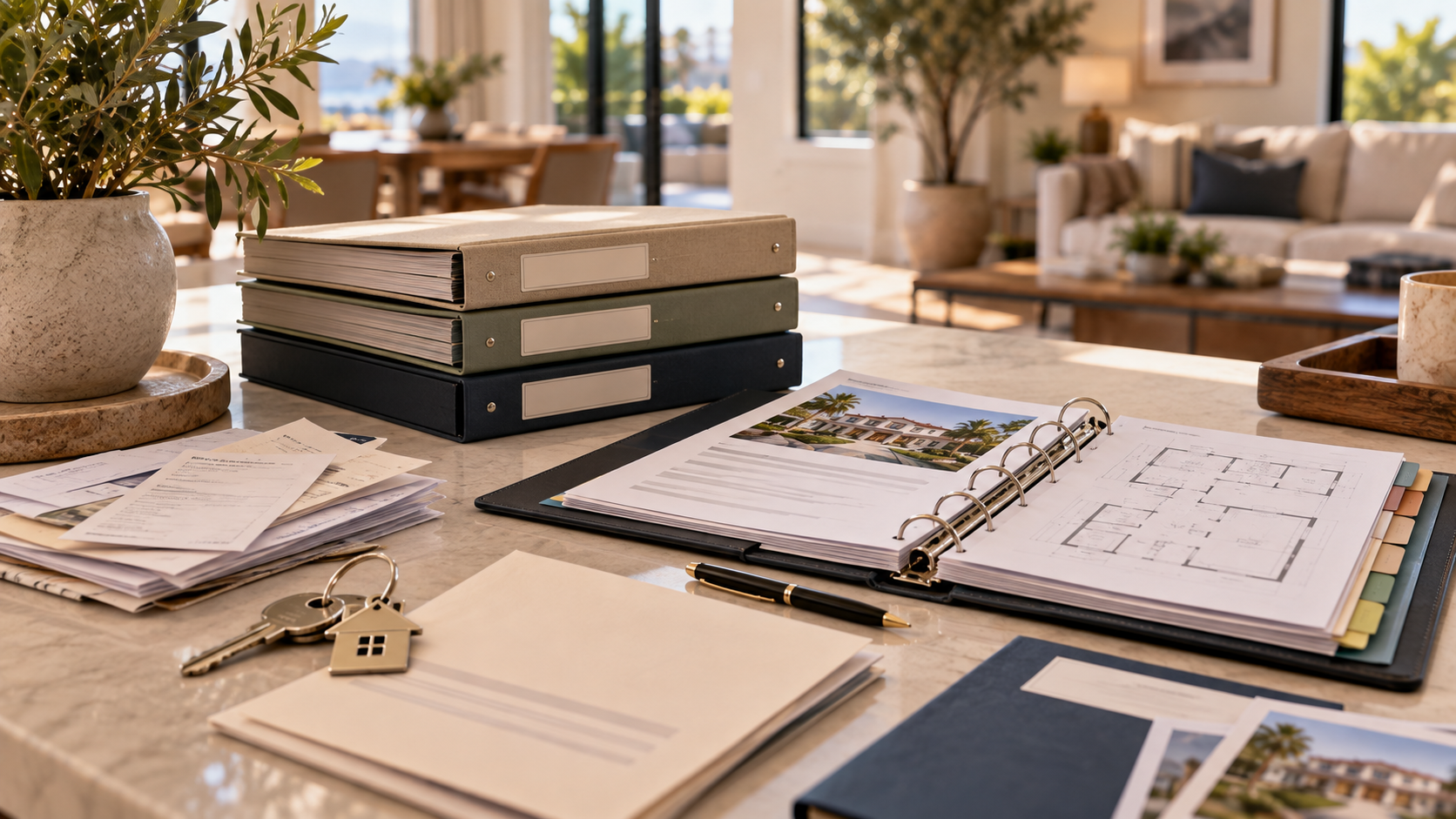
Owning a home generates more paperwork and information than many people realize. Purchase documents may be stored in one place, receipts for repairs somewhere else, warranties can remain in drawers, and information about improvements may exist only in old emails or contractor invoices. Years later, trying to reconstruct the history of the property can become unnecessarily difficult.
Maintaining organized property records does not require preserving every piece of paper associated with a home. A more practical approach is to keep information that helps document ownership, significant work, major systems, insurance, warranties, and other events that may be useful in the future. Good records can make routine maintenance easier to track, provide information when repairs are needed, and give homeowners a clearer picture of how the property has changed over time.
Start With the Documents From the Purchase
The closing of a home purchase produces a collection of documents that should generally remain accessible after the transaction is complete. The specific records involved depend on the purchase and financing, but owners may receive documents relating to the closing, title, loan, inspections, disclosures, insurance, and other parts of the transaction.
These records establish a useful starting point for the homeowner’s property file. Inspection reports can be particularly helpful because they provide information about the condition of the home around the time it was purchased. If an issue identified during the purchase is later repaired, keeping both the original information and documentation of the completed work creates a clearer history than retaining either item alone.
Homeowners should consult appropriate financial, legal, tax, insurance, or other professionals when they have questions about how long particular documents should be retained. A general property file is useful for organization, but it is not a substitute for professional record-retention requirements that may apply to an individual’s circumstances.
Keep Records of Significant Repairs
A repair that seems memorable when it occurs can become difficult to recall several years later. Homeowners may remember that plumbing work was completed but forget the exact location, contractor, materials, or date. Keeping invoices and basic information about significant repairs makes it easier to understand what has already been addressed.
Records can be especially useful when the same area develops another issue. Previous invoices, photographs, service notes, or contractor information may help establish whether the new problem is related to earlier work or is something entirely different. This history can also prevent owners from repeatedly investigating a condition without realizing that similar work was completed in the past.
Not every minor household task needs a permanent record. The objective is to preserve information that could reasonably matter when maintaining, repairing, improving, or eventually selling the property.
Document Major Home Improvements
Renovations deserve more detailed records because they can change the structure, systems, appearance, or functionality of a home. Owners may want to retain contracts, invoices, plans, product information, photographs, and relevant permit or approval documentation associated with significant projects.
This becomes particularly valuable when a renovation involved more than cosmetic changes. Additions, altered layouts, electrical work, plumbing changes, structural modifications, new windows, roofing, major outdoor improvements, or other substantial projects may be difficult to describe accurately many years after completion if the original documentation has disappeared.
The relationship between renovations and residential value can also be more complicated than the amount spent on a project. The Property Value section provides additional information about improvements, condition, comparable sales, and other characteristics that can affect how a property is evaluated.
Track Major Systems and Equipment
Homes contain equipment with different maintenance requirements and useful lives. Heating and cooling systems, water heaters, appliances, roofing, pool equipment, electrical components, plumbing systems, and other features may be installed, replaced, serviced, or repaired at different times.
Keeping basic records can answer simple questions later. When was the HVAC system installed? Which company serviced it? Is a component still covered by a warranty? When was the water heater replaced? Which model of an appliance is installed? Without records, homeowners may need to search equipment labels, old emails, bank statements, or other sources each time that information becomes relevant.
A simple list containing major components, installation or replacement dates, and available warranty information can make the property easier to manage. The list does not need to predict exactly when something will require replacement. It simply provides a reference point for understanding what is in the home.
Save Important Warranty Information
Warranties are most useful when homeowners can actually locate them. Appliances, roofing materials, windows, HVAC equipment, water heaters, flooring, fixtures, and other products may include manufacturer or installer coverage with different terms and requirements.
Owners can keep warranty documents together with purchase receipts and installation information rather than leaving them in separate product packaging. It may also be useful to note whether registration was required and whether coverage transfers to a future owner, when applicable. Warranty terms vary, so the actual documentation should be retained rather than relying on assumptions about what may be covered.
Digital copies can make these records easier to locate, particularly when the original paperwork is likely to fade or become misplaced over time.
Keep a Maintenance History
Routine maintenance records do not need to become complicated. Dates for HVAC servicing, roof work, plumbing service, tree care, pool equipment, pest-related work, exterior maintenance, and other recurring items can provide a useful overview of how the property has been cared for.
A maintenance history can also reveal patterns. If the same drain has required repeated service, an irrigation component regularly fails, or one area of the exterior needs unusually frequent attention, the history may suggest that the condition deserves a closer look rather than another isolated repair.
Homeowners looking for a broader approach to routine property care can use the Homeownership section, which covers maintenance, repairs, improvements, and other responsibilities associated with owning residential property.
Photograph Important Work When Appropriate
Photographs can provide information that invoices alone cannot. During a renovation, walls may be open and components visible that will later be concealed by drywall, flooring, cabinetry, or finishes. Photographs taken before those areas are closed can sometimes provide a useful reference for future maintenance or additional work.
Before and after photographs can also document the scope of a larger project. They do not replace permits, contracts, professional reports, or other appropriate documentation, but they can supplement written records and make it easier to understand what changed.
Digital photographs should be organized in a way that allows them to be found later. A folder labeled with the project and year is generally more useful than hundreds of images mixed into an ordinary phone photo library.
Keep Insurance Information Current
Homeowners should maintain current insurance policy information and know how to locate it quickly. Changes to the property may also create reasons to review coverage with an appropriate insurance professional. A major renovation, addition, new outdoor feature, or other substantial improvement can change the characteristics of the home from the time the original policy was established.
Receipts, photographs, inventories, or other documentation may also be useful depending on the homeowner’s circumstances and the guidance provided by the insurer. Insurance requirements and appropriate documentation vary, so homeowners should rely on their carrier or qualified insurance professional for specific recommendations rather than assuming the same approach applies to every property.
Do Not Rely Entirely on Paper
A physical property folder can work well, but important records are easier to preserve when homeowners also maintain secure digital copies. Documents can be scanned, photographs organized, and records stored using a system that is backed up and accessible to the appropriate household members.
The organizational method matters less than consistency. Some owners may prefer folders organized by year, while others may separate records into categories such as purchase, insurance, appliances, repairs, renovations, and maintenance. A system should make sense to the people who will actually use it.
Sensitive documents should also be stored appropriately. Property records can contain financial, insurance, identification, or other personal information that should not simply be placed in an unsecured shared folder.
Records Can Become Useful When the Home Is Sold
Years of property ownership can make it difficult to remember when work was completed or which components were replaced. Organized records can make it easier for an owner to answer questions about the property’s history when preparing for a future sale.
Records do not eliminate applicable disclosure obligations, establish the condition of a component today, or guarantee how a buyer will evaluate previous work. They simply provide documentation that may help explain the history of repairs, maintenance, improvements, and major systems.
Owners beginning to think about a future transaction can find broader information about preparation, pricing, offers, inspections, and closing in the Home Selling section.
Build the Property File Gradually
The easiest time to save a record is usually when the work occurs. Trying to reconstruct ten years of ownership at once can require searching through old emails, receipts, photographs, and financial records. Adding an invoice, warranty, photograph, or service date to the property file as it is created requires much less effort.
Over time, those individual records form a history of the home. They can help owners understand what has been maintained, what has changed, which systems are aging, and where to find information when a question arises. Additional material covering homeownership, buying, selling, and residential property is available through Real Estate Resources.